Free Things To Do In Birmingham City Centre
Birmingham city centre gives away more than most English cities charge for, if you know which doors are actually open without a ticket.
Short answer
Birmingham city centre has genuinely free entry at Birmingham Museum & Art Gallery, the Library of Birmingham and its rooftop Secret Garden, Ikon Gallery, two cathedrals, three civic squares, the canal towpaths at Gas Street Basin and the street art of Digbeth.
Birmingham city centre gives away more than most English cities charge for, if you know which doors are actually open without a ticket. The compact core holds a free flagship museum, a library with a rooftop garden, two cathedrals, three civic squares and a canal network you can walk for hours without spending anything, all inside roughly a mile of each other.
The genuinely free things to do in Birmingham city centre are Birmingham Museum & Art Gallery, the Library of Birmingham including its Level 7 Secret Garden, Ikon Gallery, St Philip's Cathedral, St Chad's Cathedral, Chamberlain Square, Centenary Square, Victoria Square, the Gas Street Basin canal towpaths and the Digbeth street art around the Custard Factory. All are free to enter, with no ticket and no booking.
The catch worth knowing before you plan a day is that several headline Birmingham names are not free at all, or only free in part. Aston Hall, Sarehole Mill and Blakesley Hall are free in their grounds but paid inside the houses. The Barber Institute of Fine Arts is free when open but is currently closed for refurbishment. Thinktank inside Millennium Point is a paid science museum. This guide separates what is genuinely free in the city centre from what only sounds free, so no part of your day ends at a ticket desk.
| Place | Free Status | The Catch |
|---|---|---|
| Birmingham Museum & Art Gallery | Free, no booking | Some galleries closed for phased redevelopment, full reopening targeted 2031 |
| Library of Birmingham | Free | Closed Sundays; check opening hours |
| Library of Birmingham Secret Garden | Free, no booking | Only during library opening hours |
| Ikon Gallery | Free, donations welcome | Closed Mondays |
| St Philip's Cathedral | Free, donations welcome | Closed during services |
| St Chad's Cathedral | Free, donations welcome | Closed during services |
| Chamberlain, Centenary and Victoria Squares | Free, always open | None |
| Gas Street Basin and canal towpaths | Free at all times | None |
| Digbeth and the Custard Factory | Free to walk around | None |
| Millennium Point atrium | Free to walk through | Thinktank inside is separately paid |
For a first visit, the free walking tour is the most efficient way to get your bearings. The Free Birmingham Walking Tour - Stories, Landmarks & Local Insights is run by an independent local guide called Philip on the GuruWalk platform, lasts about two hours, is in English, and is free with pay what you want at the end. It is rated 4.78 out of 5 across 59 GuruWalk reviews, and it covers exactly the city-centre geography this guide describes.
What Is Genuinely Free In Birmingham City Centre?
Birmingham city centre has ten genuinely free attractions within walking distance of each other: the museum and art gallery, the library and its rooftop garden, Ikon Gallery, both cathedrals, the three civic squares, the canal towpaths, the Digbeth street art quarter and the Millennium Point atrium. None requires a ticket or booking. The distinction matters because Birmingham's best-known heritage sites sit outside the centre and most of them charge. Inside the ring of the inner city, though, the civic offer is unusually generous. The council-run museum is free, the state-of-the-art library is free, and the entire canal-side public realm is free by design. A full day in the centre can genuinely cost nothing beyond food and drink.
The pattern has a history. Birmingham's civic institutions were largely built with Victorian industrial money and endowed as public gifts, and the free-entry tradition stuck. Birmingham Museums Trust, which runs the flagship museum and several of the paid heritage houses, keeps general admission at its city-centre site free even while its outlying properties charge. That split is the single most useful thing to understand before you arrive.
Is Birmingham Museum & Art Gallery Free?
Yes. Birmingham Museum & Art Gallery on Chamberlain Square has free general admission with no booking required, and its open galleries include the Pre-Raphaelites, the Staffordshire Hoard, Birmingham History, the Round Room, the Industrial Gallery, the Bridge Gallery and Wild City. It opens Tuesday to Sunday, 10am to 5pm, and daily during school holidays and bank holidays. The one honest qualification is that the building is partway through a phased redevelopment, with some galleries closed, and full reopening is targeted for 2031. What is open is substantial.
The Pre-Raphaelite collection is the reason art lovers make the trip. Birmingham holds one of the world's largest and strongest collections of Pre-Raphaelite painting and drawing, assembled during the movement's own lifetime, and it is displayed free in a way few British galleries match. The Staffordshire Hoard, the largest hoard of Anglo-Saxon gold and silver metalwork ever found, has a permanent free display here too, which is an extraordinary thing to put behind no ticket at all.
The building itself rewards a slow look. The Round Room, a domed Victorian gallery space, is one of the most handsome rooms in any free museum in England, and the Industrial Gallery celebrates the city's manufacturing past in a glass-roofed hall. You can spend two hours here without touching the closed galleries, and the museum shop and cafe are the only places money changes hands. Current gallery listings are on the Birmingham Museums Trust site.
Can You Go Up The Library Of Birmingham For Free?
Yes. The Library of Birmingham has free public access to the whole building, including free Wi-Fi, computers and study space, and the Level 7 rooftop Secret Garden terrace is free with no booking during library opening hours. The library is open Monday and Tuesday 11am to 7pm, Wednesday to Saturday 11am to 5pm, and closed on Sundays. An express service operates on the lower floors outside those hours.
The building is the largest public library in Europe and one of the most striking pieces of civic architecture in the country, a stacked metal-framed block wrapped in interlocking circles. The Secret Garden on Level 7 is the payoff for the climb: an elevated rooftop terrace with planted beds and a view across the city-centre skyline, entirely free and genuinely uncrowded on weekday mornings. There is also a terrace on Level 3. Neither requires a ticket, a membership or a purchase.
One room inside needs a caveat. The Shakespeare Memorial Room, the restored Victorian wood-panelled room that sits at the top of the building, is reachable as part of the free library, but it is primarily used for events and venue hire, and archive items are viewed by appointment through the Wolfson Centre. General viewing is possible during library hours only when the room is not in use for a booked event, so treat it as a bonus if you find it open rather than a guaranteed stop. Opening hours and access details are published by Birmingham City Council.
What Are The Three Civic Squares And Are They Free?
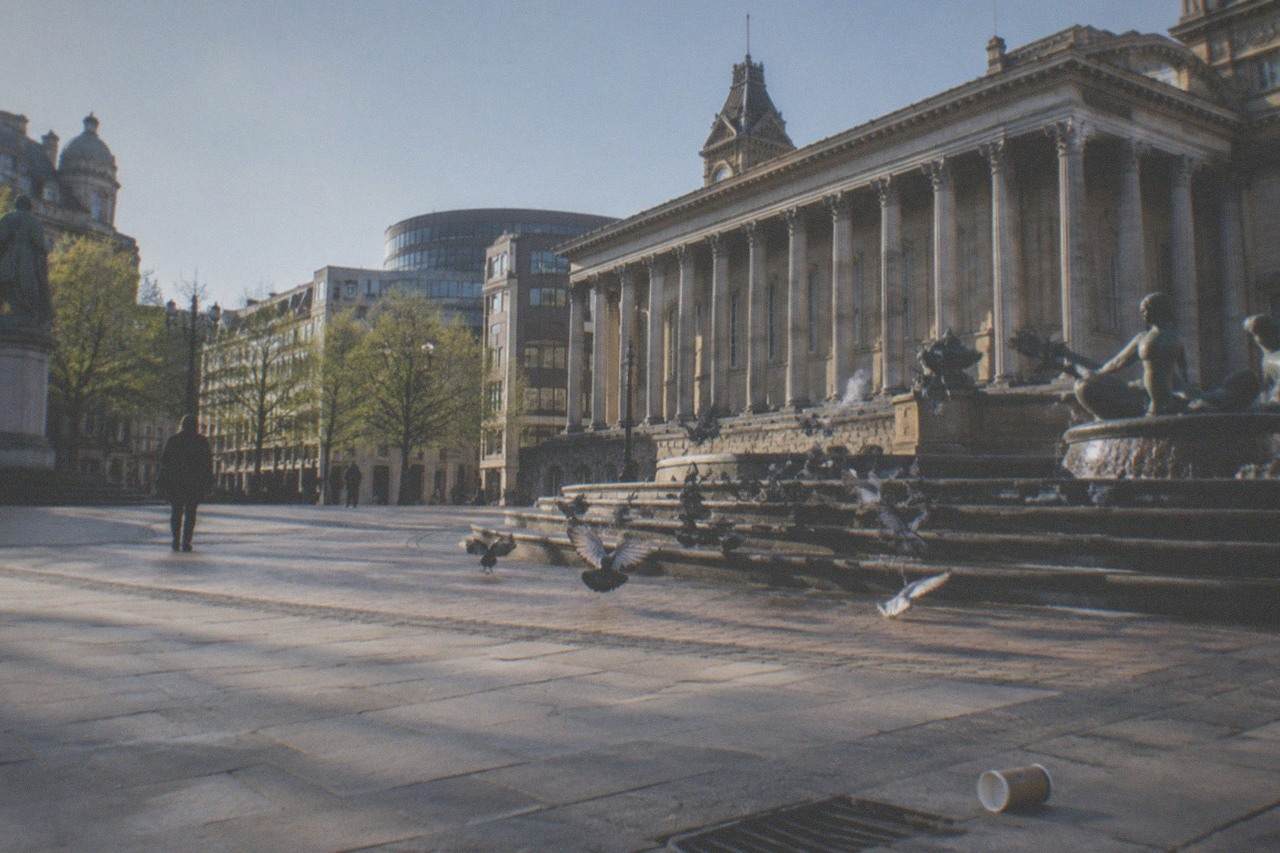
Chamberlain Square, Centenary Square and Victoria Square are free public squares in the heart of Birmingham city centre, always open, and each carries civic statues and monuments including the Chamberlain Memorial and the statue of Queen Victoria. There is no admission, no ticket and no restricted access at any of them. Together they form the civic spine of the centre, and walking all three takes under fifteen minutes without hurrying.
Victoria Square is the grandest, framed by the Council House and the Museum & Art Gallery, with the Floozie in the Jacuzzi fountain as its centrepiece and the Queen Victoria statue watching over it. Chamberlain Square, next to the museum, holds the Chamberlain Memorial and the Central Library's old site, now a public plaza. Centenary Square, a short walk west, is the modern civic space, flanked by the Library of Birmingham on one side and Symphony Hall and the Repertory Theatre on the other, with the Hall of Memory and the golden Boulton and Watt statues nearby.
The squares are where the city's public life happens: protests, Christmas events, big-screen broadcasts and the everyday lunch crowd. For a visitor they work as a free open-air itinerary in themselves, a chain of monumental Victorian and twentieth-century architecture you can read like a timeline of the city's ambitions.
Are Birmingham's Cathedrals Free To Visit?
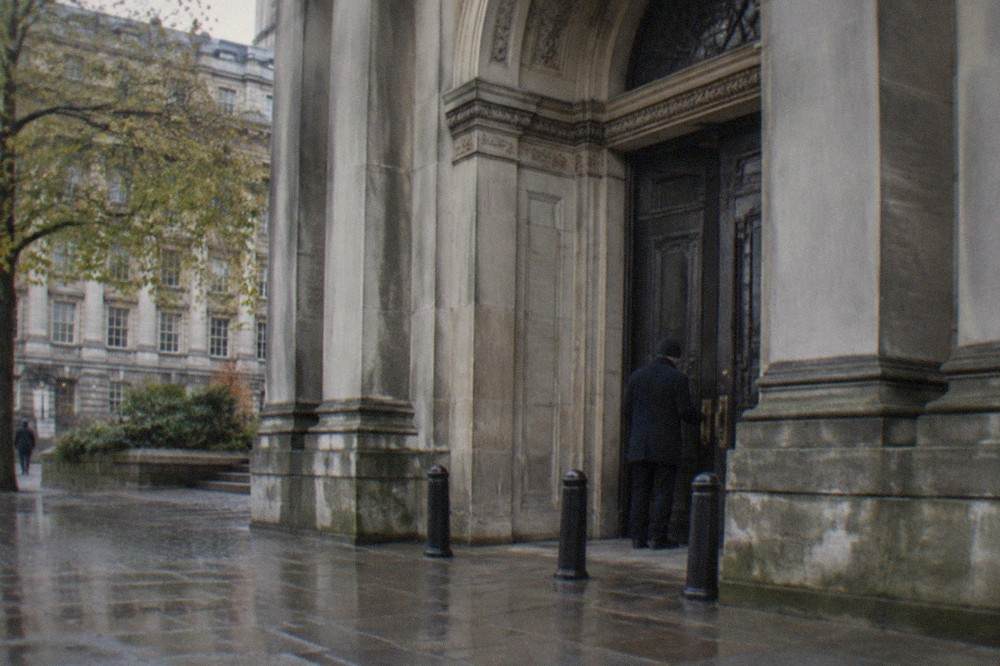
Yes. Both of Birmingham's cathedrals, the Anglican St Philip's Cathedral and the Catholic St Chad's Cathedral, offer free general entry with donations welcome. St Philip's sits on Colmore Row at the edge of the business district, and St Chad's is a short walk north of the centre on St Chad's Queensway. Both close to visitors during services, so check service times if you want the building quiet.
St Philip's is the third-smallest cathedral in England but one of the finest neoclassical buildings in the country, built in the early eighteenth century to the design of Thomas Archer. Inside are three stained-glass windows by Edward Burne-Jones, made by the William Morris firm, which alone justify the visit and cost nothing to see. The churchyard around the cathedral is a peaceful free green space in the middle of the commercial district, popular with office workers at lunchtime.
St Chad's is the mother church of the Catholic Archdiocese of Birmingham and one of the first Catholic cathedrals built in England after the Reformation, designed by Augustus Pugin in the Gothic Revival style and consecrated in 1841. It is a striking, dark, atmospheric building with a Pugin-designed interior, and it is a deliberate contrast to St Philip's light classical calm. Seeing both cathedrals free in one morning is one of the better city-centre pairings Birmingham offers.
Is Gas Street Basin Free To Walk Around?
Yes. Gas Street Basin and the Birmingham canal towpaths are free public realm, open at all times, with no admission and no ticket. The basin is where the Worcester & Birmingham Canal meets the main Birmingham line, and the towpaths run from the city centre out in several directions. This is the single best free walk in the centre, and it starts five minutes from Broad Street.
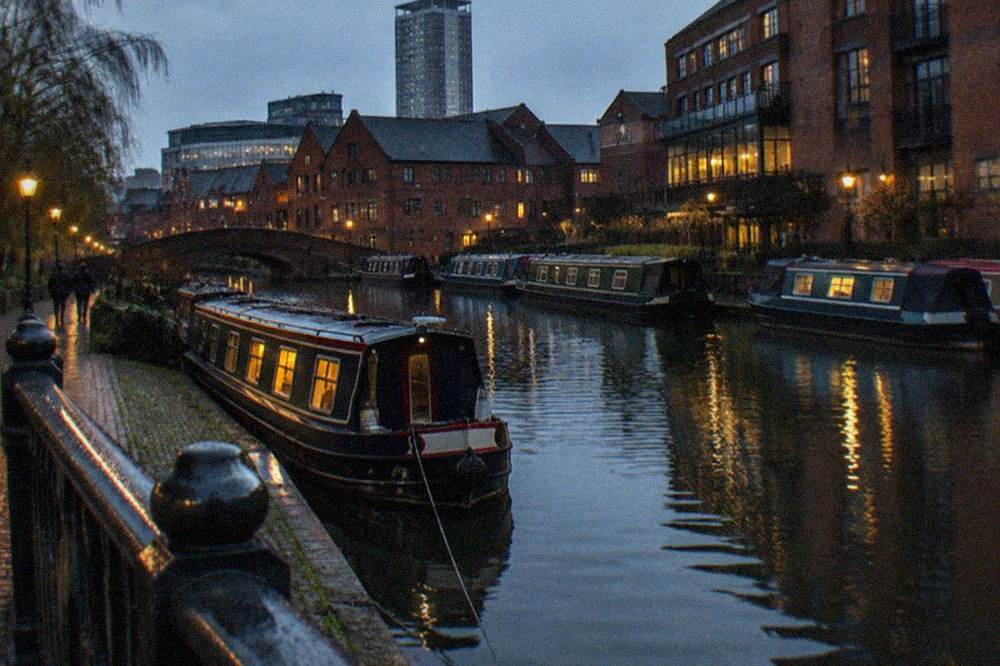
Gas Street Basin is the historic heart of the Birmingham Canal Navigations, a knot of narrowboats, converted warehouses, iron bridges and pub terraces at the water level below street grade. The brick-sided island in the middle of the basin, reached by old footbridges, was where boat families once lived, and the contrast between the working heritage and the modern bars around it is the whole character of the place. Walking the towpath east from the basin brings you past the Mailbox and through to the centre; walking it south climbs the Farmers Bridge flight of locks, one of the most concentrated lock staircases in the country.
Birmingham famously has more miles of canal than Venice, a comparison the city has leaned on for decades, and the towpaths are the free way to experience it. The surfaces are good and mostly flat, and the National Cycle Network routes share several stretches, so expect cyclists as well as walkers. For a free afternoon, pick a direction and follow the water until you want to turn back.
Is The Bull And The Bullring Area Free?
Yes. The Bullring bull statue is public art outside the Bullring shopping centre, freely viewable with no admission at any time, and the Bullring and Grand Central shopping and markets area is free to browse under standard shopping-centre public access. The bull has become the unofficial mascot of the city and one of the most photographed free sights in the centre.
The statue, a six-tonne bronze bull installed in 2003 when the Bullring was rebuilt, stands at the open-air entrance to the shopping centre. It is decorated for events and seasons, dressed in scarves at Christmas and repainted in tribute colours for sports occasions, which means repeat visitors keep finding it slightly different. The statue is a meeting point as much as an attraction, and the steady stream of people posing with it is part of the show.
The surrounding area rewards a wander even with no intention of shopping. The Bullring's exterior architecture, including the Selfridges building covered in 15,000 spun-aluminium discs, is one of the most recognisable retail buildings in Europe and free to look at from St Martin's Square, where the Victorian church of St Martin in the Bull Ring sits against the modern steel. Grand Central above New Street station continues the free-to-browse public space with its dramatic atrium roof. Neither centre charges for entry, and window shopping here is a legitimate free activity on a rainy day.
Is Digbeth Street Art Free To See?
Yes. The Custard Factory and the Digbeth street art quarter are free to walk around, with street art, murals and installations across the general public realm of the district. Digbeth sits just south-east of the Bullring and is walkable from the centre in about ten minutes. It is the closest thing Birmingham has to a free open-air gallery, and the walls change constantly.
The Custard Factory, the former home of the Bird's custard empire, is now a complex of creative businesses, independent shops, cafes and event spaces, and its courtyards and surrounding streets carry some of the densest street art in the city. The murals range from commissioned large-scale pieces to fast-turnover illegal work, so the district looks different every few months. Digbeth High Street and the side streets off it, particularly around Heath Mill Lane, hold the best concentrations.
The area's identity comes from its industrial brick. Digbeth was the manufacturing core of nineteenth-century Birmingham and much of the original building stock survives, which gives the street art a backdrop of loading bays, arches and canal-side warehouses no purpose-built gallery could copy. Walking Digbeth free is best done in daylight, and it pairs naturally with the canal towpaths, which thread through the district on their way east.
Is The Jewellery Quarter Free To Visit?
The Jewellery Quarter district itself is free to walk around, and it holds the highest concentration of listed buildings in Birmingham along with working jewellery workshops you can view from the street. However, the Museum of the Jewellery Quarter inside the old Smith & Pepper factory is a paid attraction, entered only by timed guided tour. The quarter sits just north-west of the centre and is a fifteen to twenty minute walk from Victoria Square.
The free experience is the district itself. Around 40 per cent of all British jewellery is still made within a mile of the quarter's heart, and the streets of the Hockley conservation area mix Georgian workshops, Victorian terraces and working factory units behind plain brick facades. The Jewellery Quarter clock on the old factory chimney, St Paul's Square with its Georgian church, and the Warstone Lane and Key Hill cemeteries, both free to enter, give the area its structure. Walking it costs nothing and delivers one of the most distinctive urban landscapes in the Midlands.
The museum is the one place money changes hands. The Museum of the Jewellery Quarter preserves the abandoned Smith & Pepper jewellery factory exactly as it was left when the firm closed in 1981, tools still on the benches, and entry is by timed guided tour of about 45 minutes, running Thursday to Sunday with pre-booking advised. It is an excellent museum, and it is honestly a paid one, so budget for it or enjoy the quarter's free streets instead.
Is The Birmingham Christmas Market Free To Enter?
Yes. Entry to the Birmingham Christmas Market is free, and only food, drink and stall purchases cost money. The market fills the city centre around New Street and Victoria Square each winter, and the exact 2026 dates had not been officially confirmed at the time of writing, so check before planning a visit. The market is one of the largest German-style Christmas markets outside Germany and Austria.
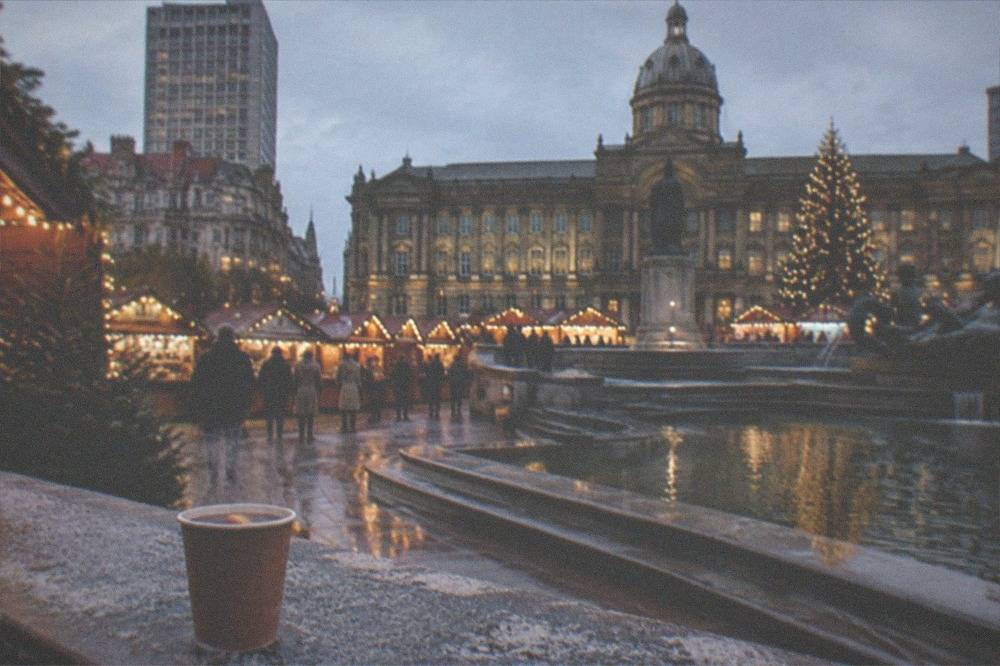
The free part is substantial. The market's wooden stalls, lights, decorated walkways and the atmosphere of the whole transformed centre cost nothing to experience, and plenty of visitors walk the full length of the market, take in the decorations and leave without buying. The route runs through the pedestrian core of the city, which means the Christmas Market doubles as a free festive walking tour of the centre, passing the bull, New Street, the Council House and the squares in one loop.
What costs money is predictable: the bratwurst, the gluhwein, the crafts and the rides. Prices at the stalls are typical of UK Christmas markets, which is to say not cheap, and the free-entry framing is worth keeping clear in your head. A family can enjoy an evening at the market for nothing beyond the train fare in, provided nobody is promised a hot chocolate.
Is Cannon Hill Park Within Reach Of The Centre?
Cannon Hill Park has free entry, with gates open roughly 7:30am to dusk, and it sits about a mile and a half south of the centre along the Rea Valley route, reachable on foot from the city core in around forty minutes or by a short bus or train hop. The mini-golf, boating and fun fair inside the park are separately paid, but the parkland itself is free.
Cannon Hill is Birmingham's premier urban park, 250 acres of lakes, flowerbeds, woodland and open grass, given to the city by a nineteenth-century donor and maintained as public parkland ever since. The two lakes sit at its heart, with a boating centre on one, and the park connects directly to the Rea Valley route, the traffic-free walking and cycling corridor that follows the River Rea towards the centre. Walking in along the Rea Valley from Digbeth is the free, scenic way to arrive, and it turns the park into a genuine car-free day out.
The park's paid extras are clearly fenced off from the free experience: the mini-golf course, the boat hire and the fun park rides all take separate payment. Everything else, including the bandstand, the flower gardens, the conservation area and miles of path, is free. On a sunny weekend the park fills with families who have spent nothing to be there, which is the point of it.
What Is Not Free In Birmingham City Centre?
The paid attractions in and around Birmingham city centre are Thinktank Birmingham Science Museum, the Museum of the Jewellery Quarter, the Back to Backs, the Barber Institute of Fine Arts when it reopens after refurbishment, Cadbury World, the Botanical Gardens and the Wildlife Conservation Park. Millennium Point's atrium is free to walk through, but Thinktank inside it charges. None of these should appear on a zero-budget itinerary without a caveat.
The most common trap is Thinktank. Visitors enter the Millennium Point building freely, see a modern public atrium and assume the science museum inside is part of the deal. It is not: Thinktank is a separately ticketed attraction with adult admission from roughly 15.50 pounds. The one free window is for university students, who get free walk-up entry Tuesday to Friday with valid student ID. Everyone else pays.
| Attraction | Cost | Free Exception |
|---|---|---|
| Thinktank, Millennium Point | Paid, adult from roughly 15.50 pounds | University students free Tue to Fri with ID |
| Museum of the Jewellery Quarter | Paid, timed guided tour | None |
| Birmingham Back to Backs | Paid, pre-booked National Trust tour only | National Trust members under standard terms |
| Barber Institute of Fine Arts | Free when open, currently closed for refurbishment | Free admission on reopening |
| Cadbury World | Paid, pre-booking essential | None |
| Birmingham Botanical Gardens | Paid day ticket | None |
| Birmingham Wildlife Conservation Park | Paid, roughly 9.50 pounds adult standard | None |
The Back to Backs deserve a specific warning because they sound like a free heritage street and are not. The National Trust property is a courtyard of restored working-class houses, and access is by pre-booked guided tour only, with standard National Trust ticket pricing. You can see the exterior freely from Inge Street, but the interior experience is ticketed. The Barber Institute is the opposite case: a free-admission gallery that is simply not currently open, closed since January 2025 for a major refurbishment with reopening expected in 2026, so it belongs on a future itinerary rather than a current one.
Which Free City Centre Places Have Opening Hours To Watch?
The free city-centre attractions that need planning around hours are Birmingham Museum & Art Gallery, closed Mondays and open Tuesday to Sunday 10am to 5pm; the Library of Birmingham, closed Sundays; Ikon Gallery, closed Mondays and open 11am to 5pm; and both cathedrals, which close to visitors during services. The squares, canal towpaths, Digbeth and the bull statue are free and open at all times.
| Place | Open | Closed |
|---|---|---|
| Birmingham Museum & Art Gallery | Tue to Sun 10am to 5pm, daily in school holidays | Mondays |
| Library of Birmingham | Mon and Tue 11am to 7pm, Wed to Sat 11am to 5pm | Sundays |
| Ikon Gallery | Tue to Sun and bank holiday Mondays 11am to 5pm | Ordinary Mondays |
| St Philip's Cathedral | Daytime visitor hours | During services |
| St Chad's Cathedral | Daytime visitor hours | During services |
| Squares, towpaths, Digbeth, the bull | At all times | Never |
The practical read is that Mondays thin out the free options: the museum and Ikon are both shut, which leaves the library, the cathedrals, the squares, the canals and Digbeth. Sundays are the reverse, with the library closed but the museum open. A rainy day points you towards the library and museum; a dry day points you towards the towpaths and Digbeth. None of this costs anything to work around.
Can You See Birmingham City Centre For Free In One Day?
Yes. A single free day in Birmingham city centre can cover Birmingham Museum & Art Gallery, the Library of Birmingham and its Secret Garden, Victoria Square, Chamberlain Square, St Philip's Cathedral, Gas Street Basin and the Digbeth street art, with the Bullring bull and Grand Central thrown in between. Every stop on that list is free to enter.
One tested shape for the day: start at the Museum & Art Gallery for the Pre-Raphaelites and the Staffordshire Hoard, cross Chamberlain Square to Victoria Square and the Floozie in the Jacuzzi, walk up Colmore Row to St Philip's Cathedral and its Burne-Jones windows, then cut back through the centre to the Library of Birmingham for the rooftop Secret Garden. From the library, Centenary Square leads west to the canal, and the towpath drops you down to Gas Street Basin. The final leg walks the towpath or the streets to Digbeth for the street art, ending at the Custard Factory. That is a full day, several miles of walking, and an entrance fee total of zero.
The free walking tour slots into this day naturally, either as a morning orientation before the museum or as an afternoon spine through the centre. Because it is free with pay what you want, it does not break the zero-budget arithmetic; the cost is two hours and whatever you choose to tip the guide at the end.