Are Free Walking Tours Really Free?
Free walking tours cost nothing upfront and run on tips. Here is how the pay-what-you-want model works in Birmingham and what a fair tip looks like.
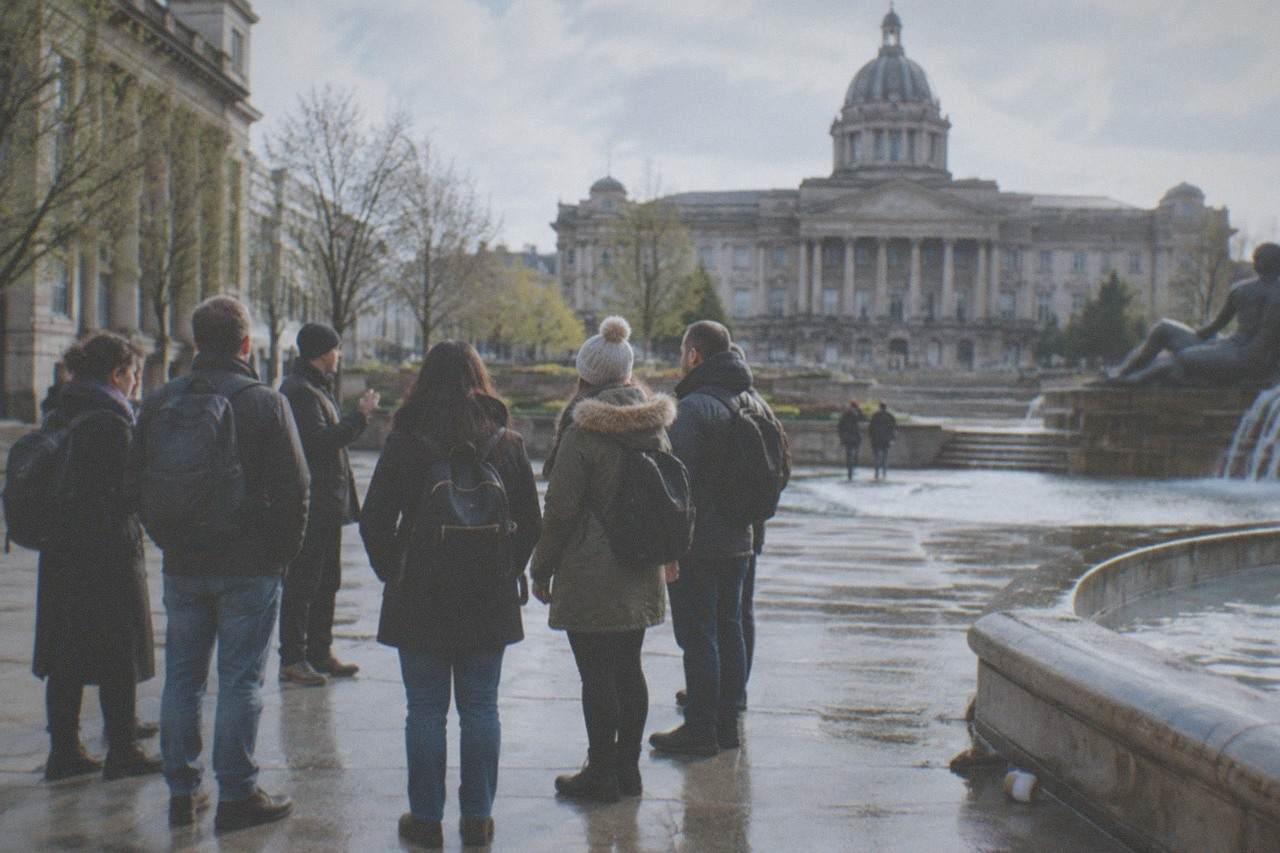
Yes, free walking tours really are free to join. You pay nothing to book, nothing to turn up and nothing to walk away at the end. The "free" is a pay-what-you-want model: the guide works for tips, and the only money that ever changes hands is the amount you choose to hand over when the tour finishes. There is no minimum, no invoice and no obligation, though tipping is the custom that keeps these tours running.
That answer is simple, but the details behind it are where most of the confusion lives. The table below breaks the model into its parts, and the rest of this article covers what a fair tip looks like, what happens at the end of a tour, and how the same "free with a condition" logic applies across Birmingham's attractions.
| Question | Short Answer |
|---|---|
| Do you pay to book a free walking tour? | No. Booking costs nothing on platforms like GuruWalk. |
| Do you pay to attend? | No. There is no charge at the meeting point. |
| Is a tip required? | No, but it is the strong custom and the guide's income. |
| Is there a set price? | No. Pay what you want is the actual pricing model. |
| Can you leave early? | Yes, at any point, with nothing owed. |
The one free walking tour this site features is a good example of the model in practice. The Free Birmingham Walking Tour - Stories, Landmarks & Local Insights is run by an independent guide called Philip on the GuruWalk platform, it lasts about two hours, and it is free with pay what you want at the end. It is rated 4.78 out of 5 across 59 GuruWalk reviews, a figure that belongs to GuruWalk's own review system rather than to any site of this kind. There is no price to quote because free, pay what you want is the price.
How Does The Pay-What-You-Want Model Actually Work?
Free walking tours operate on a pay-what-you-want model: the tour itself has no price, the guide covers their own costs, and every participant decides at the end what the experience was worth to them. The model grew out of the free tours movement that spread across European cities in the 2000s, and it now runs through platforms such as GuruWalk, where independent guides publish their own routes and set their own meeting points.
The mechanics are straightforward. A guide designs a route, publishes it on a platform, and opens bookings. Travelers reserve a spot without paying anything. On the day, the group meets at the advertised point, the guide leads the walk, and at the end the guide mentions that tips are how they earn. Each person then gives what they want, in cash or increasingly via card apps, and the group disperses.
The platform's role is smaller than most people assume. GuruWalk does not employ the guides, does not set prices and does not collect the tips. It lists the tour, handles bookings and hosts the reviews. The guide keeps the relationship with the audience on the day, which is why the quality of a free tour depends almost entirely on the individual leading it rather than on any company behind them.
This is also why the model survives commercially. A guide who consistently delivers a strong two-hour walk in a city with heavy footfall can earn more from voluntary tips than they would from a fixed wage, because good free tours convert a large share of their group into satisfied tippers. A weak guide earns little and usually stops running tours. The market polices itself through reviews, which is why the review count and rating on a listing are worth reading before booking.
How Much Should You Tip On A Free Walking Tour?
There is no required amount, but the widely accepted custom on free walking tours is roughly the price of a sandwich and a coffee per person, with more for an exceptional guide and less, or nothing, for a poor one. In UK cities, that typically lands somewhere between five and fifteen pounds per person for a standard two-hour walk, with ten pounds being a common middle ground. None of these figures is a rule; they are the norms that have grown up around the model.
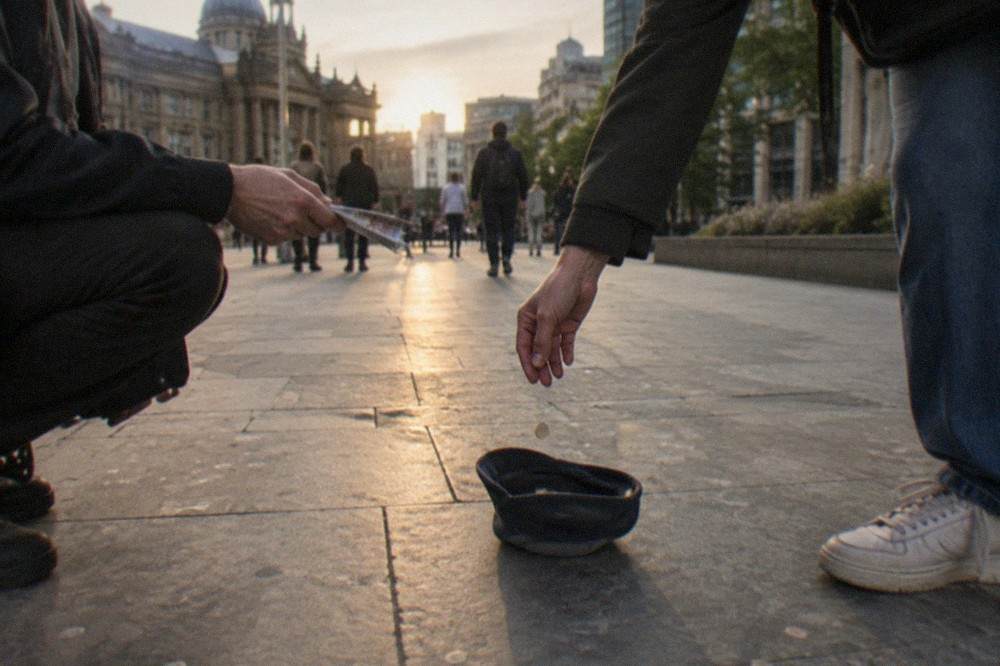
A useful way to think about it is to compare the tour against paid alternatives. A fixed-price guided walk in a major UK city often costs fifteen to twenty-five pounds per person. If the free tour matched that quality, tipping at the lower end of that paid range is a fair benchmark. If the guide was average, a smaller amount is honest. If the guide was outstanding, generous, or clearly went beyond the route, people commonly tip above it.
Families and groups sometimes tip per person and sometimes as a pot, and both are accepted. Solo travelers on a tight budget are not expected to match a family of four. The custom is proportional to what the experience was worth to you, which is the entire point of the model: it prices the tour at exactly what each participant thought it deserved.
What the tip is not, is a fee in disguise. Guides on legitimate free tours do not chase non-tippers, do not demand a minimum and do not name an amount as mandatory. If a walk does any of those things, it is not running the model honestly, and that is a signal worth acting on.
What Happens At The End Of A Free Walking Tour?
At the end of a free walking tour the guide stops the group, thanks them, explains that tips are their income, and then leaves everyone free to pay what they choose before dispersing. This moment is the part first-timers worry about most, and it is almost always more relaxed in practice than in anticipation.
The guide typically finds a suitable spot near the final landmark, delivers a short closing summary, and mentions tipping openly. Good guides make this low pressure: they state that the tour was free, that tips are welcome, and how they can be taken. Cash is still the simplest option, and many UK guides now also carry a card reader or display a payment app, since fewer people carry notes than a decade ago.
Then the group breaks up. Some people hand over money directly, some queue for the card reader, some thank the guide and leave. Nobody is asked to account for themselves. The whole exchange usually takes a few minutes, and the guide moves on to their next group or their evening.
Booking platforms never see this money. GuruWalk's role ends with the listing, the booking and the reviews. That separation matters for trust: the tip goes to the person who actually led the walk, not to an intermediary taking a cut of it.
Are Free Walking Tours Lower Quality Than Paid Ones?
Free walking tours are not inherently lower quality than paid ones, because the pay-what-you-want model rewards good guides with more bookings and better tips while quietly pushing weak ones out, though quality varies more between individual guides than between price models. A fixed price guarantees the operator an income regardless of delivery. A free tour guarantees nothing, which concentrates the incentive on the person doing the talking.
The evidence available to a traveler before booking is the review record. The Birmingham walk featured on this site carries 4.78 out of 5 across 59 GuruWalk reviews, which is a strong score on that platform's five-point scale. Reviews on free-tour platforms tend to be blunt, because people who paid nothing upfront still feel free to complain, and a guide with a sustained high score across dozens of reviews has earned it repeatedly.
The honest differences run the other way in some respects. Paid tours often include reserved entry, audio equipment or a guaranteed small group size, and those conveniences are real. Free tours are usually larger, run in all weathers, and skip anything that needs a pre-booked ticket. For a first orientation walk in a city, none of that matters much. For a specialist deep-dive, a paid product may serve better.
The two models also attract different guides. Free tours draw independent operators building their own business on reputation, which suits storytellers. Paid tours draw operators who can guarantee volume, which suits logistics. Neither profile is automatically the better guide.
Which Birmingham Attractions Are Actually Free?
Birmingham's headline attractions split into three groups: genuinely free, conditionally free, and paid, and the conditionally free group is the one that catches visitors out, because the free part and the paid part are often on the same site. The city's museum operator, Birmingham Museums Trust, runs several historic properties where the grounds cost nothing but the house interior carries a ticket, and it is easy to arrive expecting one and find the other.
The table below summarises the pattern using verified entry rules from the operators' own pages. The key habit is to read the second column, not just the first.
| Attraction | Free Status | The Condition |
|---|---|---|
| Birmingham Museum & Art Gallery | Free | Some galleries closed for phased redevelopment, full reopening targeted 2031 |
| Aston Hall | Grounds free | House interior paid, and the house closes for winter from roughly early November |
| Library of Birmingham | Free | Building and rooftop Secret Garden free; Shakespeare Memorial Room is mostly paid venue hire |
| Millennium Point | Atrium free | Thinktank science museum inside is a separate paid attraction |
| Coffin Works | Paid | Free community day on Wednesdays for Ladywood Ward residents with proof of address |
| Birmingham Botanical Gardens | Paid | Day ticket required, booked online with an arrival time |
This pattern is exactly why the free walking tour model fits Birmingham so well. A pay-what-you-want walk through the city centre costs nothing to join, and it can be paired with a day of genuinely free sights without spending a pound beyond the tip. The rest of this article looks at a few of those pairings.
Where Can You Walk For Free In Birmingham Beyond A Tour?
Birmingham has an unusually rich supply of free public space, from the canal towpaths at Gas Street Basin to two cathedrals with open doors, and most of it sits within an easy walk of the city centre. The canals are the standout. Birmingham sits at the heart of England's canal network, and the towpaths are free public realm, open at all times with no admission, threading from Gas Street Basin out towards the Jewellery Quarter and beyond.
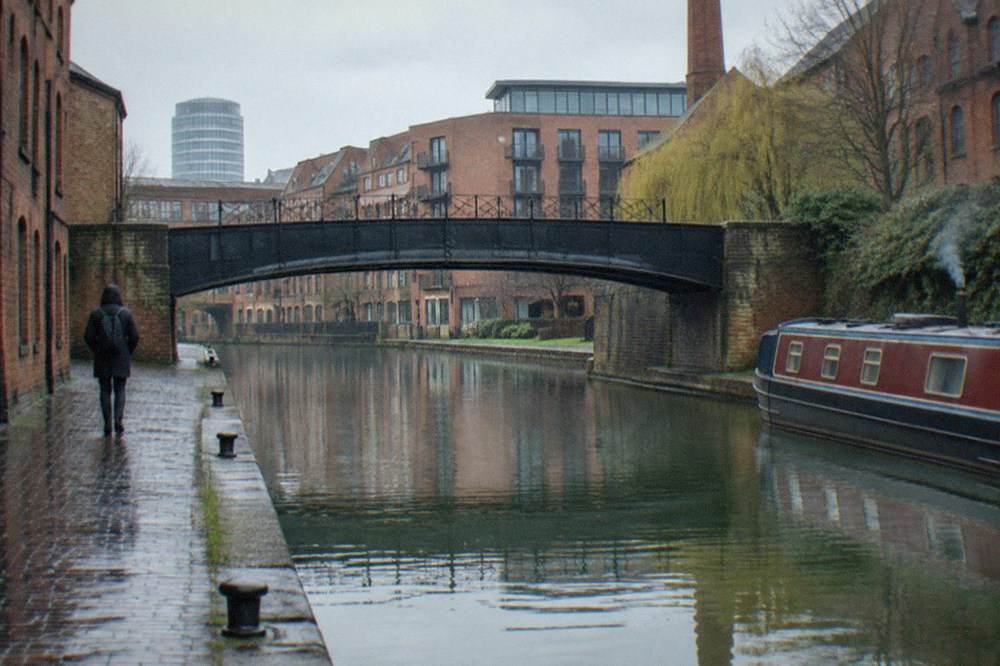
Gas Street Basin and the Birmingham canal towpaths are the natural extension of any city-centre walking tour, because the basin sits minutes from Broad Street and the route continues for miles in either direction. Walking it costs nothing, and it delivers the industrial heritage that defines the city.
Not everything green in Birmingham is free, and the Wildlife Conservation Park is a useful example of the trap in reverse. It is a paid attraction, with adult tickets around 9.50 pounds standard and 11.50 pounds at peak times such as weekends, bank holidays and school holidays, according to Birmingham City Council's own ticket-prices page. People sometimes assume council-run animal collections are free parks; this one is not, and budgeting for it in advance avoids an awkward gate moment.
Churches are the opposite case: two of Birmingham's most significant religious buildings genuinely cost nothing to enter. St Chad's Cathedral Birmingham, the mother church of the Catholic Archdiocese, offers free general entry during normal opening hours, with donations welcome. St Philip's Cathedral in the city centre runs the same arrangement. Both are calm, architecturally serious buildings that reward a slow visit, and neither asks for a ticket.
When Is "Free" Not Really Free?
"Free" stops being honest when the word describes an entry point to something paid, when a condition is buried, or when a tour uses the label to lock you into upsells, and all three patterns are common enough in tourism to be worth naming. The classic version is the attraction whose grounds are free but whose interior, the part you actually came for, carries a ticket. Birmingham's historic houses under Birmingham Museums Trust work this way openly, and their own pages state it plainly, which is the acceptable version of the pattern.
The less acceptable version hides the condition. A venue advertised as free that turns out to be free only on one weekday, or only for local residents, or only with a student card, is not lying exactly, but it is relying on you not reading past the headline. Coffin Works, for instance, is a paid museum whose free Wednesday is genuinely free, but only for residents of Ladywood Ward with proof of address. That is a real community offer, not a visitor offer.
Tours can run the same trick. A "free" tour that funnels the group into a shop, a restaurant or a paid upgrade, with the guide earning commission on stops, is using free as bait. Legitimate pay-what-you-want tours disclose commercial relationships and keep the route about the city. The tipping model itself is the transparent version: the only money in the system is the tip you choose to give, openly, at the end.
The practical defence is the same for attractions and tours alike: find the entry rule on the operator's own page before travelling, and treat any "free" claim without a stated condition as unverified until an official source confirms it.
How Do You Judge A Free Tour Before Booking?
Judge a free walking tour on three things before booking: the review record on the platform, the specificity of the route description, and the clarity of the meeting point, because those three together expose almost every weak listing. Reviews matter most on free-tour platforms because the barrier to complaining is low; nobody who paid nothing feels obligated to be polite about a bad walk.
The review count matters as much as the score. A 5.0 from six reviews tells you little. A 4.78 from 59 reviews, like the Birmingham walk featured here, tells you the guide has delivered that standard repeatedly to full groups. On GuruWalk the rating is out of five, and the review count sits next to it on the listing, so both figures take seconds to check.
Route descriptions reveal effort. A listing that names actual streets, squares and stories is a guide who has done the work. A listing of vague superlatives is a guide who will improvise. Meeting-point clarity is the third tell: a real address with a landmark beats "central square" every time, because a guide who cannot describe where to find them has not thought about the traveler's morning.
None of this takes long. Two minutes on the listing before booking is the entire quality-control step the model asks of you, and it converts a coin-flip experience into a reliable one.
Where Does The Tip Money Actually Go?
On a legitimate pay-what-you-want tour, the tip goes directly to the guide who led the walk, with no cut taken by the listing platform and no employer standing between them and the money. This is the structural fact that makes the model work, and it is worth understanding because it explains why guides are willing to run tours with no guaranteed income.
GuruWalk, the platform hosting the Birmingham walk featured on this site, lists tours and collects nothing from the tips. Its revenue comes from optional paid services around the listing ecosystem, not from a percentage of what travelers hand over at the end of a walk. The guide sets the route, turns up, delivers it and keeps what the group gives.
That directness also explains the etiquette. When you tip a free-tour guide, you are paying a specific person for two hours of their work, not settling a bill with a company. It is closer to tipping a musician in the street than to paying a ticket office, and the social norms around it feel correspondingly personal.
It also explains why the model produces good tours in competitive cities. A guide with no salary, no employer and no fixed price has exactly one income source: a group of people deciding, freely and privately, what the last two hours were worth. That is a strong incentive to be good, and the review systems on the platforms make the results public.